Star Copper’s Phase 1 six-hole drill program has successfully accomplished several important tasks which include:
Confirmation of copper mineralization in multiple intrusive phases,
Refined structural and alteration models, including potassic halos and supergene enrichment,
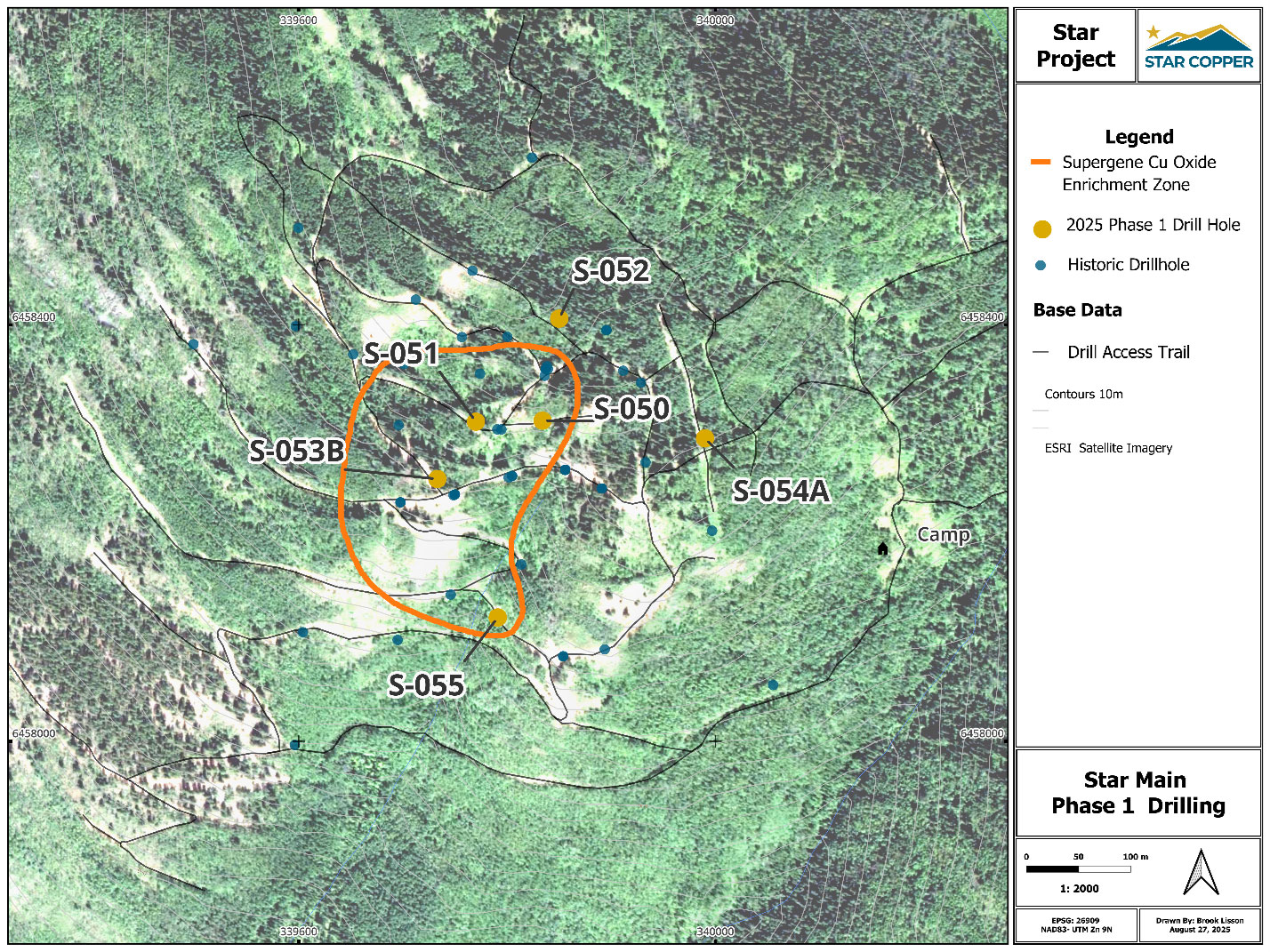
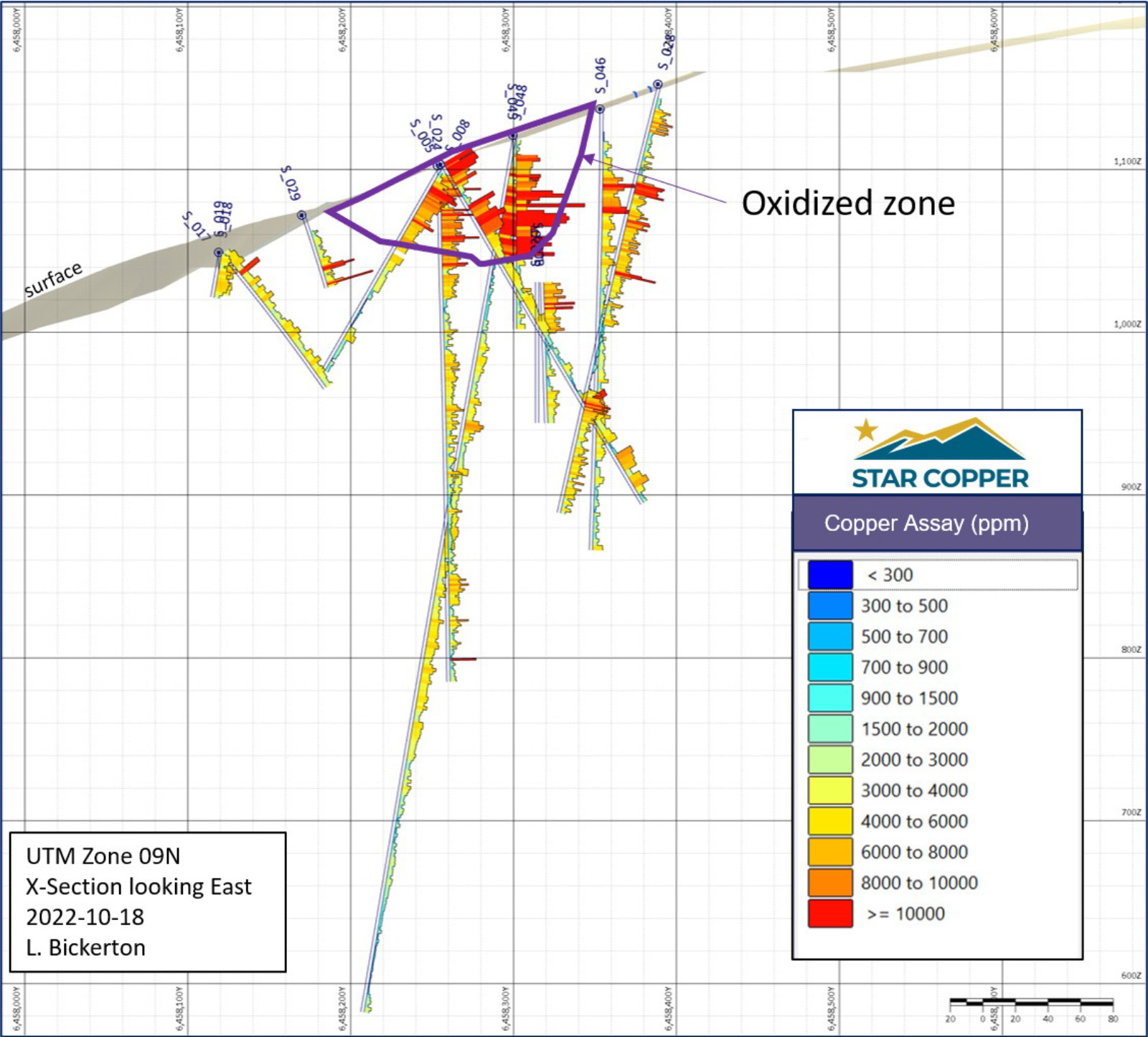
Expanded the supergene mineralized footprint at the Star Main zone up to 250m x 300m.
The six-hole drill campaign (see map right) consisted of target holes 2025 A-F (S-050, S-051, S-052, S-053B, S-054A, S-055) and totaled over 2200m which culminated with the recently completed Hole S-055 (2025-F) which intersected a near-surface oxide horizon with visible malachite and azurite (see news release of August 25, 2025)
Star Project Copper Oxide Zone and Phase 1 Exploration Drill Targets. Star Copper 2025 Click/tap image to enlarge.
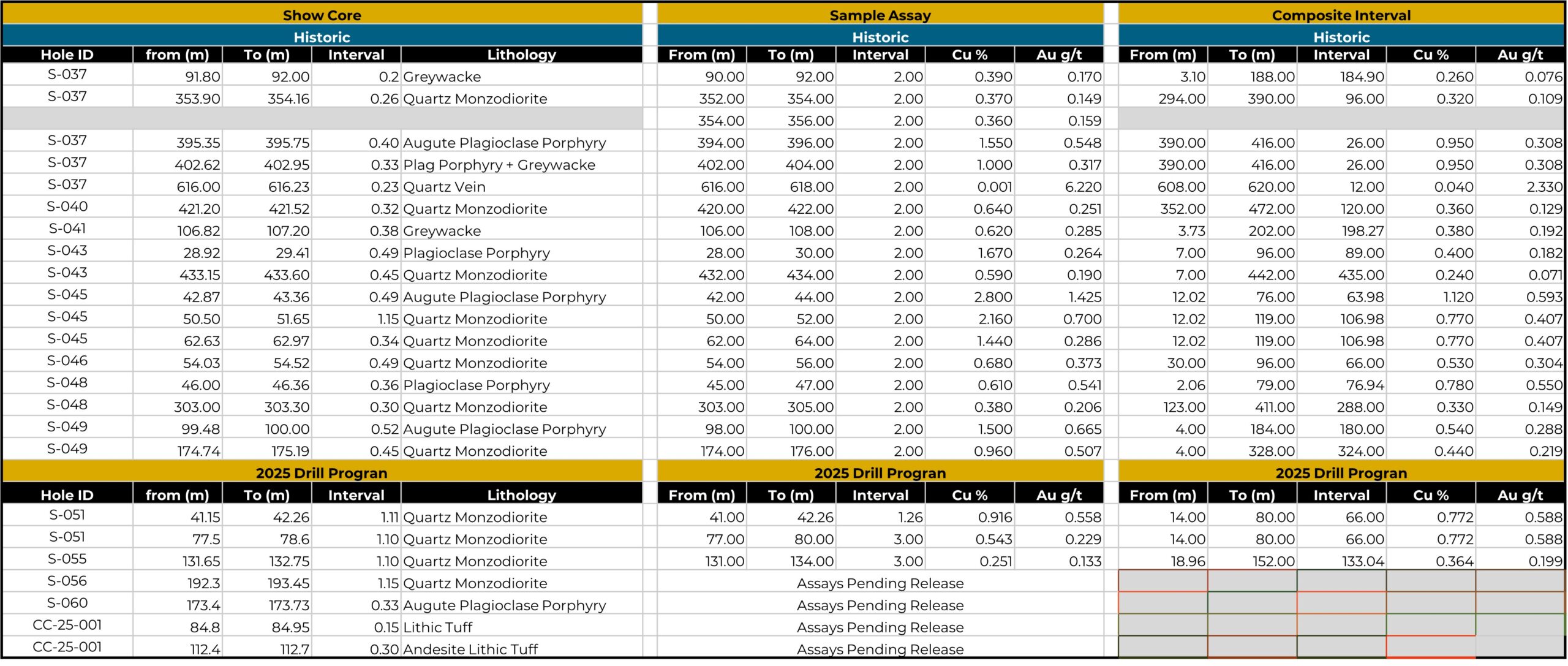
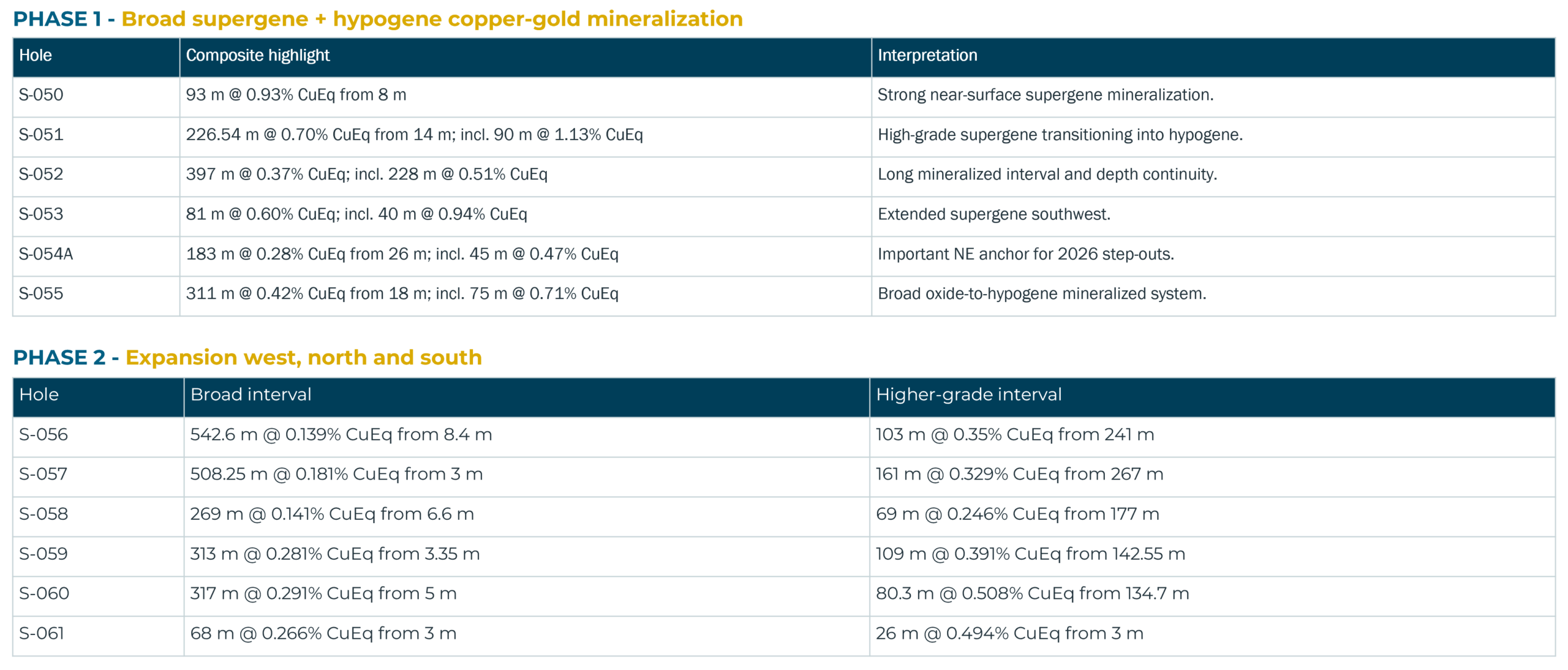
Star Copper Drilling Highlights - Click to Enlarge
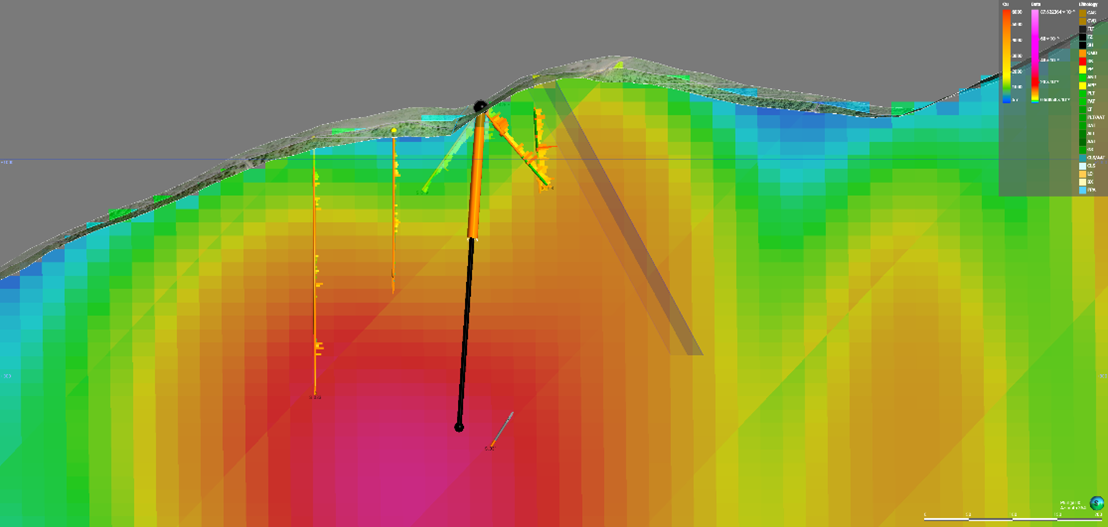
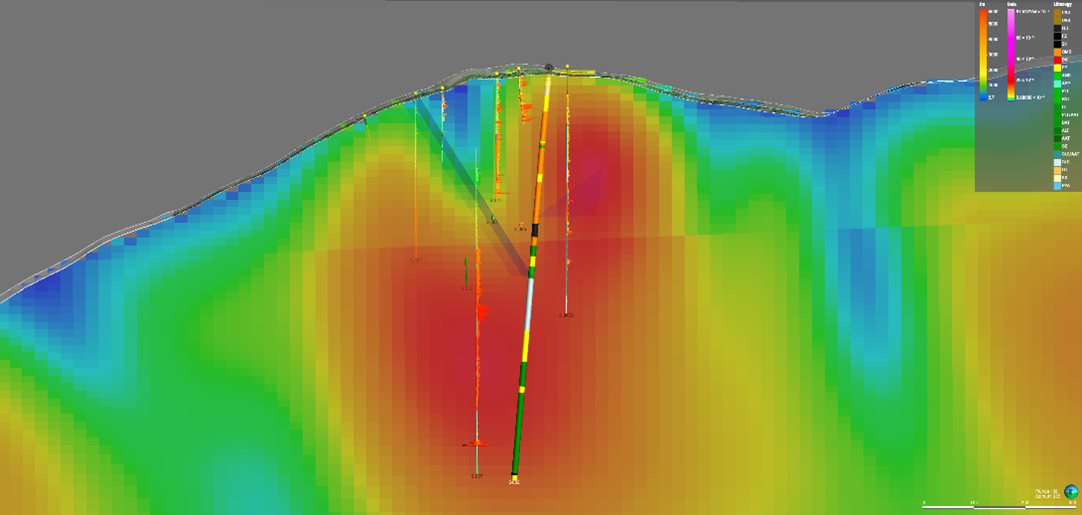
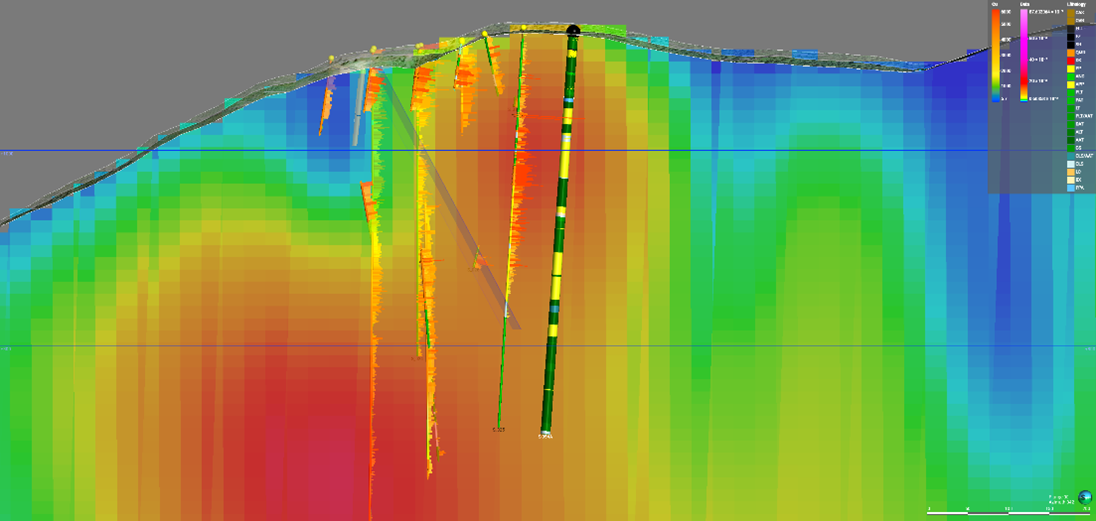
CROSS SECTION FIGURES FOR DRILL HOLES A-TO-F
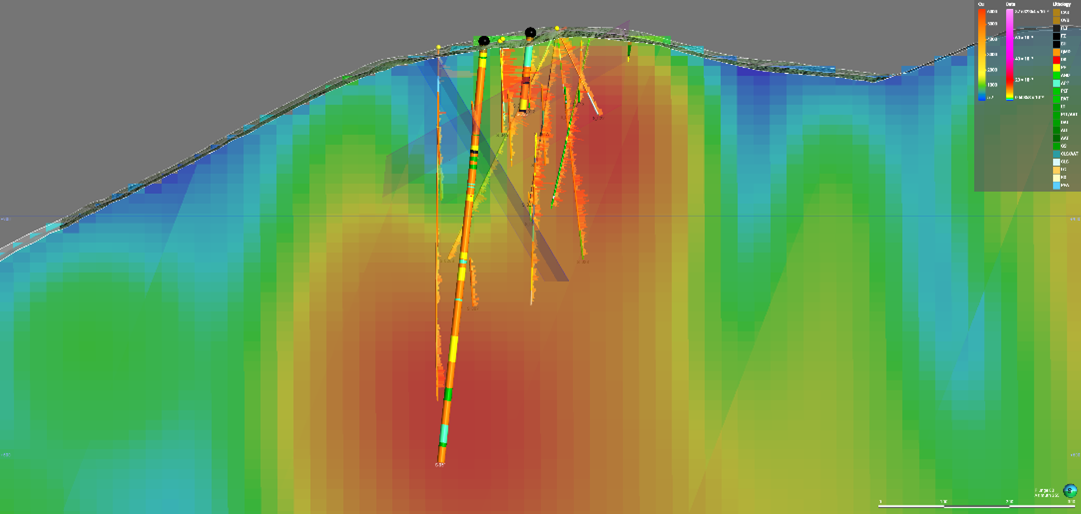
Figure 1 – Drill Holes A and B (S-050 & S-051) Click/tap image to enlarge.
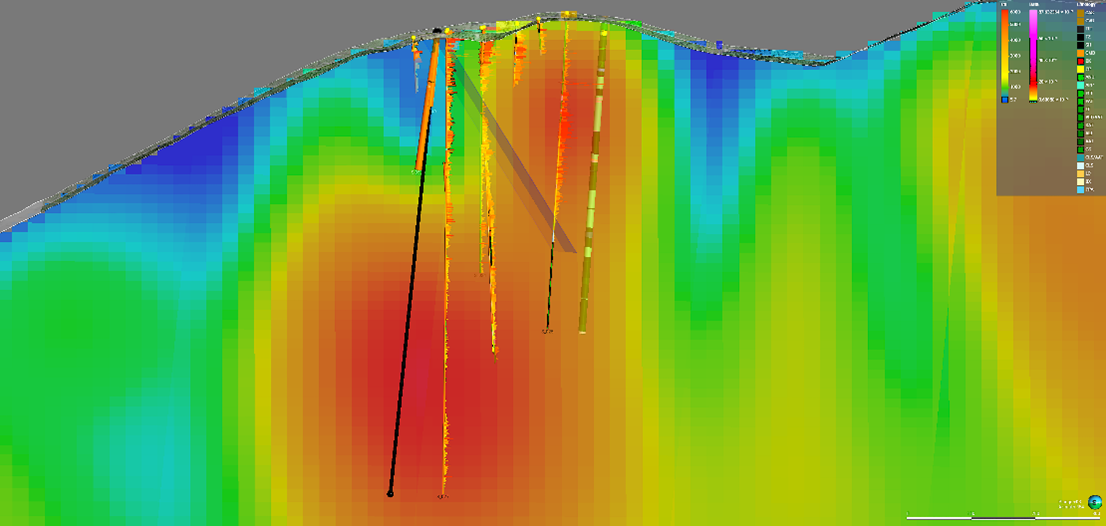
Figure 3 – Drill Hole D (S-053A / S-053B) Click/tap image to enlarge.
Figure 5 – Drill Hole F (S-055) Click/tap image to enlarge.
Figure 2 – Drill Hole C (S-052) Click/tap image to enlarge.
Figure 4 – Drill Hole E (S-054A) Click/tap image to enlarge.
The Phase 1 drilling expanded the near-surface supergene footprint to the west and southwest, confirmed copper mineralization across multiple intrusive phases, and sharpened the structural and alteration framework, particularly along the Star Fault and associated potassic (K-feldspar) alteration corridors.
The supergene zone at Star Main is a particularly noteworthy prospect for Star Copper and a relatively rare find for this area of Canada., Supergene enrichment is a geological process where valuable metals are concentrated near the Earth’s surface, producing an enhanced grade of ore deposits. Hypogene mineralization involves ascending fluids from deep within the Earth. Chalcopyrite mineralization refers to the occurrence of chalcopyrite, a copper iron sulfide mineral (CuFeS2), within various geological formations and ore deposits.
The technical team is now incorporating these results into a refined 3D model to guide the follow-up Phase 2 drill program slated for the fall season of 2025. This next phase will prioritize step-outs into newly defined targets and further test structural and geochemical continuity across the broader Star property.
Qualified Person
Jeremy Hanson, P. Geo., a Qualified Person as that term is defined under NI 43-101, is an independent contractor of the Company and has reviewed and approved the technical aspects of the information above.
2025 Star Main Select Drill Results
Phase 2 confirmed multiple mineralized corridors and left Star Main open for further expansion. Click to Enlarge
PREVIOUS EXPLORATION
2013 Highlights
The 2013 campaign intercepted porphyry style mineralization extending beyond 500 metres before surface at the Star target.
312.16m @0.37% Cu, 0.24 g/t Au (S024)
269m @0.42% Cu, 0.198 g/t Au (S025)
263m @0.35% Cu, 0.15 g/t Au (S026)
72m from 504m to 576m @0.27% Cu and 0.10 g/t Au (S027)
2014 Highlights
20 diamond drill holes totaling 6,661.5m expanded known mineralization at Star target laterally and to depth.
Star target supergene defined as approximately 550m north-south and 350m east-west.
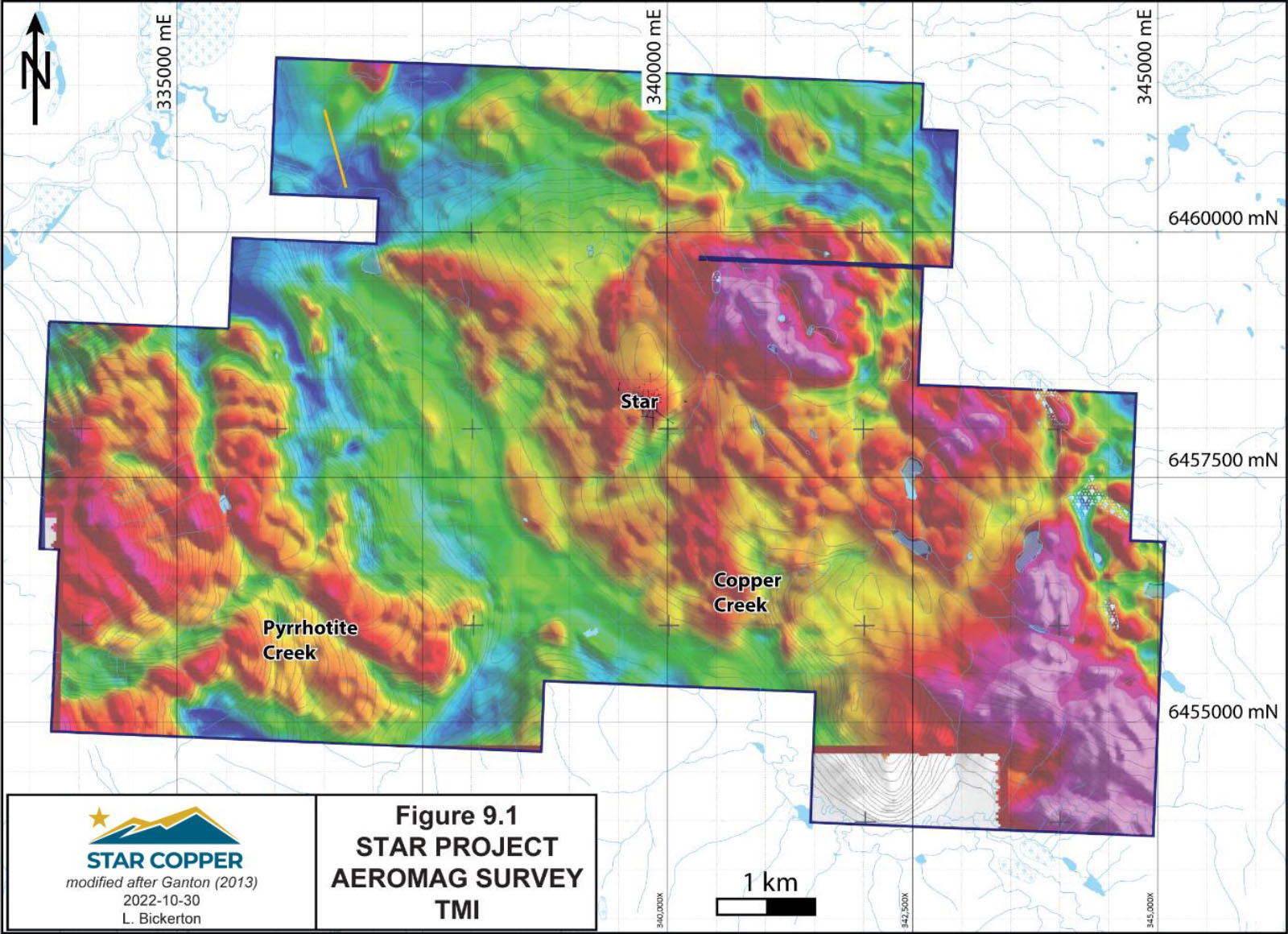
Merged Total Magnetic Intensity (TMI) map with property tenure overlain.
Click/tap image to enlarge.
Induced Polarization (IP) survey of the Star target area: Chargeability.
Click/tap image to enlarge.
Induced Polarization (IP) survey of the Star target area: Resistivity.
Click/tap image to enlarge.
PHASE 1 DRILLING - COMPLETE
Phase 1 Drill Program Overview 2700m
Phase 1 comprised six drill holes (S-050 through S-055/S-053B) focused on testing the Star Main copper-gold system, particularly the near-surface supergene (oxidized) zone and defining structural controls on mineralisation.
The program was designed to:
Confirm and expand the known supergene copper footprint,
Refine geological and structural models (potassic alteration, star fault corridors), and
Provide vectors for follow-up Phase 2 drilling.
Strong Copper-Gold Intercepts
Early released assays from three Phase 1 holes showed significant mineralisation, including:
Hole S-051: 226 m @ 0.67% CuEq from 14 m, incl. 40 m @ 1.56% CuEq in the supergene zone.
Hole S-050: 93 m @ 0.91% CuEq from 8 m near surface.
Hole S-052: 397 m @ 0.37% CuEq from 29 m, including deeper higher-grade intervals, demonstrating both oxide and hypogene mineralisation.
Deeper and Structural Insights
Later holes, such as S-053, S-054A and S-055, continued to confirm hypogene copper-gold mineralisation beneath the oxide zone, with highlighted intercepts like: 311 m @ 0.42% CuEq from 18 m (including 133 m @ 0.55% CuEq).
Drill results helped refine alteration and structural frameworks, particularly the role of the Star Fault and potassic alteration corridors in localising mineralisation.
Technical and Program Summary
Phase 1 integrated historic drilling with modern geophysics to test lateral and vertical continuity of mineralisation.
Drilling confirmed broad copper occurrence from surface oxides to deeper hypogene zones, supporting a nested porphyry model with potential for expansion.
PHASE 2 DRILLING - COMPLETE
Phase 2 Program – Complete and Awaiting Assays
A Multi-Year Area Based (MYAB) Notice of Work Permit is in Hand
Surface drilling from 200 ground and helicopter supported locations.
Camps: Up to 35 people at Star.
Mechanical trenching at 50 sites.
50 LINE km IP survey.
5 km of new exploration trail construction.
The Star Project will benefit from significant database compilation and organization to streamline historic results and interpretations.
The geologic model for the Star would benefit from a complete classification and delineation of porphyry dikes and veins.
Classifying dikes and veins from the historic data is crucial and delineation in the subsurface may explain mineralization continuity.
A structural interpretation at the Star will better define a deformational history in the region and potentially attribute mineralization, lithologies and topography to structural features.
Further IP data acquisition on the project may benefit from a deep IP survey on the main Star target as well as shallow surveys on pyrrhotite creek and copper creek.
For the less developed prospects on the property, trenching is planned. These prospects include the Star East, Star North, and Star West targets that are characterized by strong soil geochemical and geophysical anomalies.